
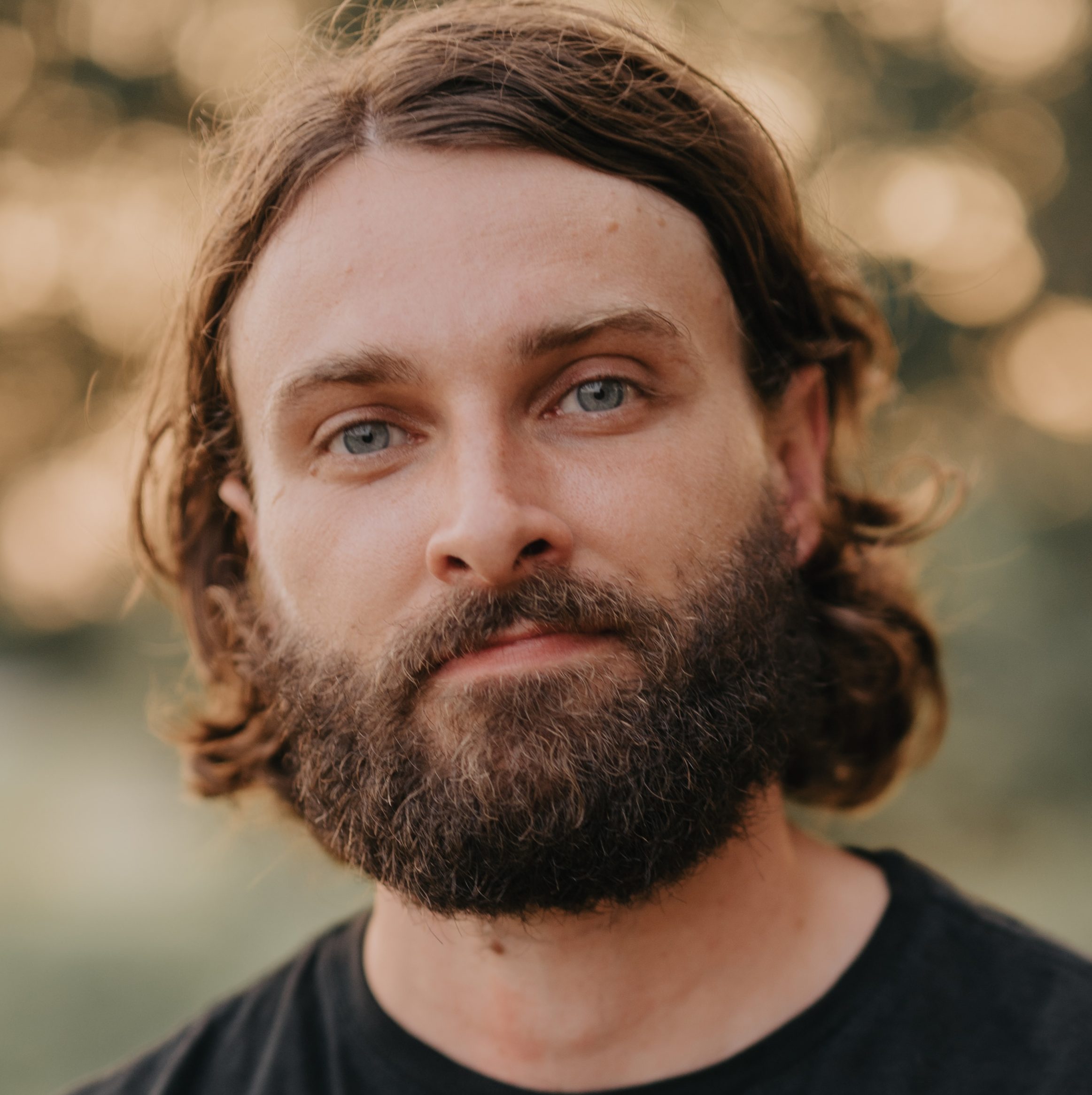

ASHLAND — Tegan Drake was young when she got raped by a boy she knew from school.
It wasn’t long after that, at age 13, when she started drinking and using drugs. When she graduated high school, she moved on to harder substances. She got pregnant. Then, when her youngest son was about a year old, she overdosed. She was living with her parents at the time.
“My children found me on the bedroom floor,” Drake said.
She then lost custody of her kids as she spiraled into an abyss of heroin addiction that led her through a revolving door of treatment and jail.
“I wanted it really bad, I just didn’t know how to do it,” she said of recovery.
At some point, she wound up with Charles Price, an intensive in-home therapist connected to David Grove, a licensed independent social worker who focuses on a model of recovery emphasizing family involvement.
For example, a counseling session using the family treatment model could involve the recovering addict sitting down with a counselor and their parents during a session to talk about painful events from the past and how parents could help with the recovery process.
That’s how it looked for Drake — and it worked.
She spoke about her experience finding recovery at a conference in Ashland recently. Now more than four years sober, she was joined by Grove and Price — who said the family treatment model, known as Integrated Family and System Treatment, brought her to sobriety and reconciliation.
Grove developed IFAST in 2000. Since then, he has consulted with mental health boards across Ohio as an alternate approach that seeks recovery through reconciling intimate relationships.
He has partnered with Appleseed Community Mental Health Center and the Mental Health and Recovery Board for around 12 years. The partnership involves Grove offering counselors consultations and trainings on the model.
Since then, the agencies and their therapists have adopted the model — but it focuses mostly on youth with behavioral and delinquency issues.
When it comes to using the family treatment model with adults struggling with substance abuse, it’s challenging, social workers in Ashland County said.
“Our work really grew out of a need to work with teens having problems with school and juvenile court,” said Jerry Strausbaugh, executive director at Appleseed. “With adults, they’re less inclined to want to go down that road of getting help from family.”
There are a number of reasons for this.
Sometimes the abuser seeking help has family members who are themselves addicted, said Mary Jo Janchar, an adult counselor at Ashland County Council of Alcohol and Drug Abuse.
Other times, the one seeking help is ashamed, said Jeremy Smith, Appleseed’s co-occurring program coordinator.
“There’s a lot of shame and stigma that goes with it,” he said. “You can’t get into trouble telling someone you’re depressed, but you can if you say you’re addicted to meth.”
He said many times these people also burn bridges with family and friends — making it tough to get buy-in from those close to the person struggling with addiction.
Another hurdle is turnover. How often can an agency adequately train counselors when the turnover rate is so high?
The Substance Abuse and Mental Health Services Administration published a report in 2017 that said the substance abuse field has a rate as high as 50%, with an average annual estimate of 32% for counselors.
Perhaps the largest barrier, however, is ideological, Grove said.
“The staff themselves have to buy into it. For those who have been in the field for a long time, a lot of them are not open to it. So they have to be interested,” he said, adding the traditional way of substance abuse treatment involves detox and subsequent counseling, without family.
Grove said often the first step in creating that paradigm shift among the “old guard” of adult substance abuse counselors is generating buy-in from administration at treatment facilities.
It’s how Grove’s model was adopted at Perry Behavioral Health Choices, an organization that provides treatment to those struggling with substance use and mental health disorders in Perry County.
Lisa Harper, Perry BHC’s program supervisor for individual and family counseling, said getting buy-in from counselors used to doing their jobs with a level of confidentiality took a while.
“They were so used to seeing clients individually. Confidentiality is a huge component to treatment. But as time went on, they were showed how it works when we all did treatment together. And they embraced it,” Harper said.
In 2021, Harper’s team helped to reunify 14 children with their parents using the approach.
Harper works a lot with children who have been removed from the home because of a family member’s addiction or mental-health issues. In many cases, the IFAST family treatment approach allows the family or close friends to work together toward reunifying the children with parents.
It’s a paradigm shift. Instead of attacking recovery in a vacuum, the family treatment model relies on a collaborative approach that has adult counselors and youth counselors working to create solutions, Harper said.
“I’m seeing more people being integrated with the (family) treatment model,” Harper said. “A lot of people are engaged in the community and it’s not just the addict anymore.”
The team of eight counselors at Perry BHC has worked with Grove’s IFAST model for five years, both with children and adults. It doesn’t work for everyone, but it does for the people who trust the process, Harper said.
Sometimes clients are on board initially and then relapse when they can’t peel away from the lifestyle because it’s so ingrained in their living environment.
“We’re a small area,” Harper said, referring to New Lexington, a village of around 4,700 people located an hour east of Columbus.
Gaining trust through the family treatment model is an important step in helping the person disengage with the old way of living, Harper said.
No matter the challenge, Grove evangelizes the effectiveness of the family treatment model as meaningful recovery for those struggling with drug and alcohol abuse. He’s spread the IFAST model to social workers in the U.S. and in Hong Kong. He’s written four books about the model and its effectiveness.
“I think we too often eliminate family (as an option for treatment for those struggling with substance abuse),” Grove said.
Grove modeled IFAST off a 1983 study that contrasted the effectiveness of two treatment models used on heroin addicts.

Studying male heroin addicts between the ages of 18 and 33, the researchers found that involving family members in the treatment process made a difference in the longevity of sobriety when compared to usual treatment.
“Eight out of 10 that completed treatment as usual were back to addiction within six months,” he said, describing “usual treatment” as in-patient detox, a methadone regimen followed by an intensive outpatient program and “900,000 NA meetings.”
He said 80% of those in the study who only got 10 family therapy sessions were sober for two years.
“We should all take note of that,” Grove said.
In some ways Grove is preaching to the choir in Ashland County.
“We are designed to be connected, to have a tribe, a family, a group,” said Strausbaugh.
He said Appleseed’s therapists approach treatment and recovery in a wholistic way, which considers the person’s mental and physical well-being. If that means pulling in support from aunts, uncles, cousins, parents or neighbors, Strausbaugh said those avenues are explored.
He knows family is important to clients. They tell him so.
A 2021 inter-agency survey used for Appleseed’s clients show that 76% of them “identify (that) they are improving their family or other close relationships due to the services they are receiving.”
The agency’s goal is to get 75% of their clients to agree with that statement. Going forward, implementing family systems in all treatment services is a goal of the agency.
“With family systems (treatment), you’re trying to change the whole system — not just the one individual,” Smith said. “Sometimes that means changing lives one family member at a time. We’re doing the work to ensure that happens.”
Smith is hopeful more struggling with substance abuse will allow their families in to help, but he thinks more buy-in from the general community is needed.
“Substance use is not seen as a treatable thing in Ashland, but there’s a strong understanding of family in Ohio and in Ashland County. That’s huge,” he said.
So the question that all agencies involved with substance abuse treatment need to ask, according to Grove, is “how can we give the family things to do that the addict will find helpful?”
“We’re trying to figure that out,” he said.
For Drake, the answer was linked to how her addiction affected her family. Coming to that realization took time and several sessions that involved a counselor and her parents — all in the same room.
“My illness made my family just as sick, if not sicker, than I was,” Drake said.
She said she tried getting better alone, but it didn’t work. The family treatment model worked for her because it brought the family together.
“That was the first time we were, like, a whole family. You know, we were a whole family again for the first time in a long time,” she said.
Drake, 37, has since gained custody of both her sons — who are now 11 and eight. She lives and works in Cambridge and has been sober for more than four years.
When reached on the phone recently, Drake was at work. She works as a housing manager at a sober living facility for the agency where she did her treatment. She’s also taken on a peer position through the agency.
“It’s important for people to understand that addicts can’t just recover alone,” she said, emphasizing this point. “There has to be a support system involved.
“For me, the family piece was necessary.”
